The legal framework for marine management worldwide is the United Nations Convention on the Law of the Sea. It obliges the contracting states to co-operate on an international, European and national level and to effectively protect the marine environment. Other international agreements, regional sea conventions and a large number of national declarations of intent specify and underline this requirement. However, little action has taken place up to date and this has many different reasons.
What is needed for effective marine management?
Efforts are constantly increasing, but in many places there is a lack of political will, financial resources, qualified staff and the relevant specialised authorities to actually enforce applicable laws and regulations for the protection and sustainable use of the oceans. In addition, the tasks of marine management are spread across too many sectors and institutions that independently operate of each other. Their employees in turn, lack the tools and incentives for a coordinated approach across sectoral boundaries.
It is now clear that none of the major environmental crises of our oceans can be solved alone. Current research shows that the global climate, the biodiversity and the pollution crisis affects coasts, seas and oceans in an equal measure. The global community must therefore tackle the challenges together and consider the crises in a coherent manner. However, this requires a new holistic approach to marine management at all levels. This requires a greater willingness to cooperate as well as a growing sense of responsibility among all stakeholders and clear rules of liability in case of violations. There must also be transparent decision-making processes and new participation formats that can be used to resolve utilisation conflicts and to involve all stakeholders in the relevant discussions.
A reform of the marine administration is also necessary. Instead of rigid authorities, which are separated in different sectors, there should be a network-like decision-making structure, involving representatives from politics, economy, research and civil society. These networks should work on developing solutions to protect the ocean and to use its ressources sustainably across different topics and areas of responsibility. Innovative financing mechanisms are also required in order to effectively implement solutions successfully.
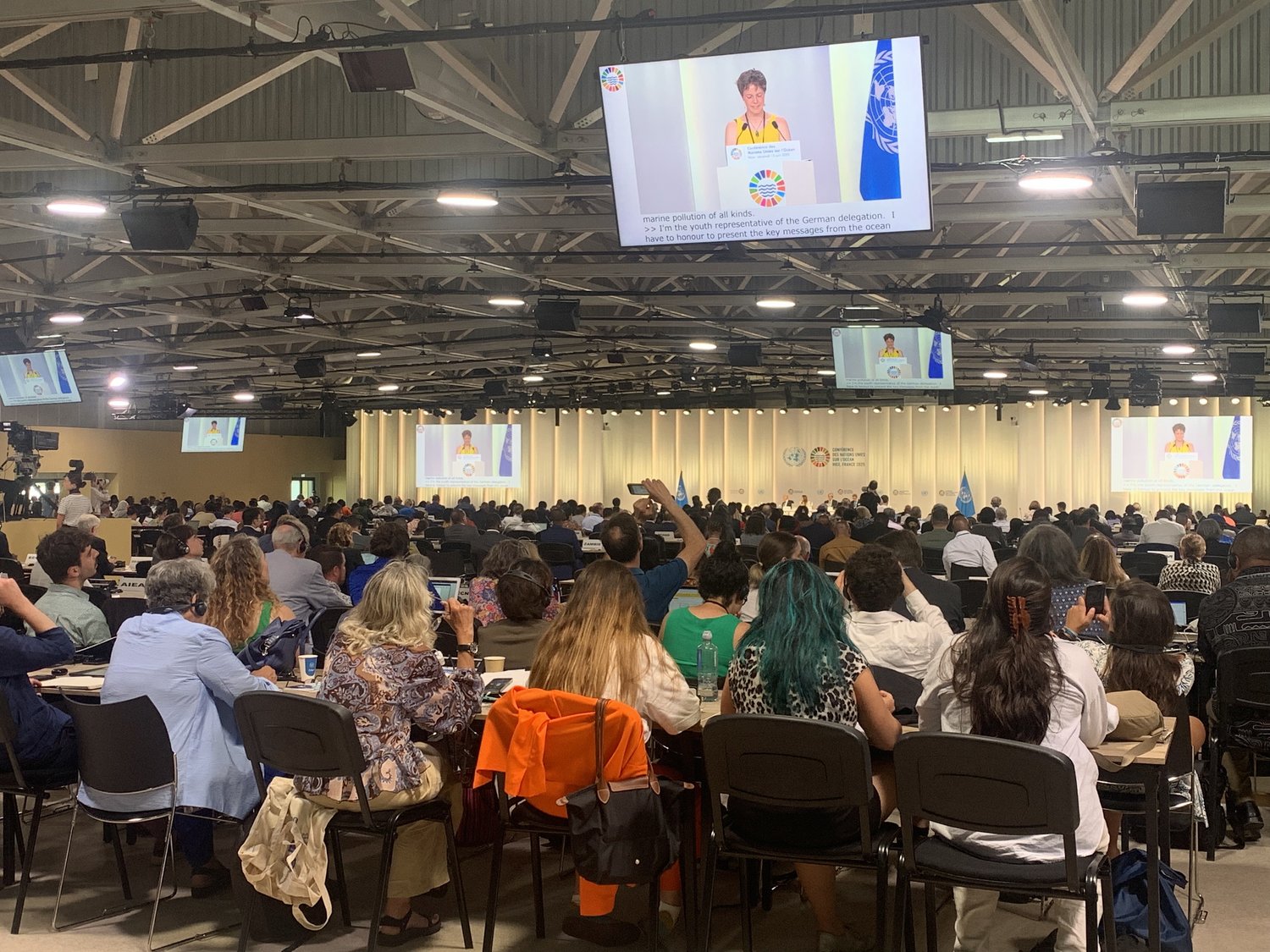
Focus topic: UN Ocean Conference
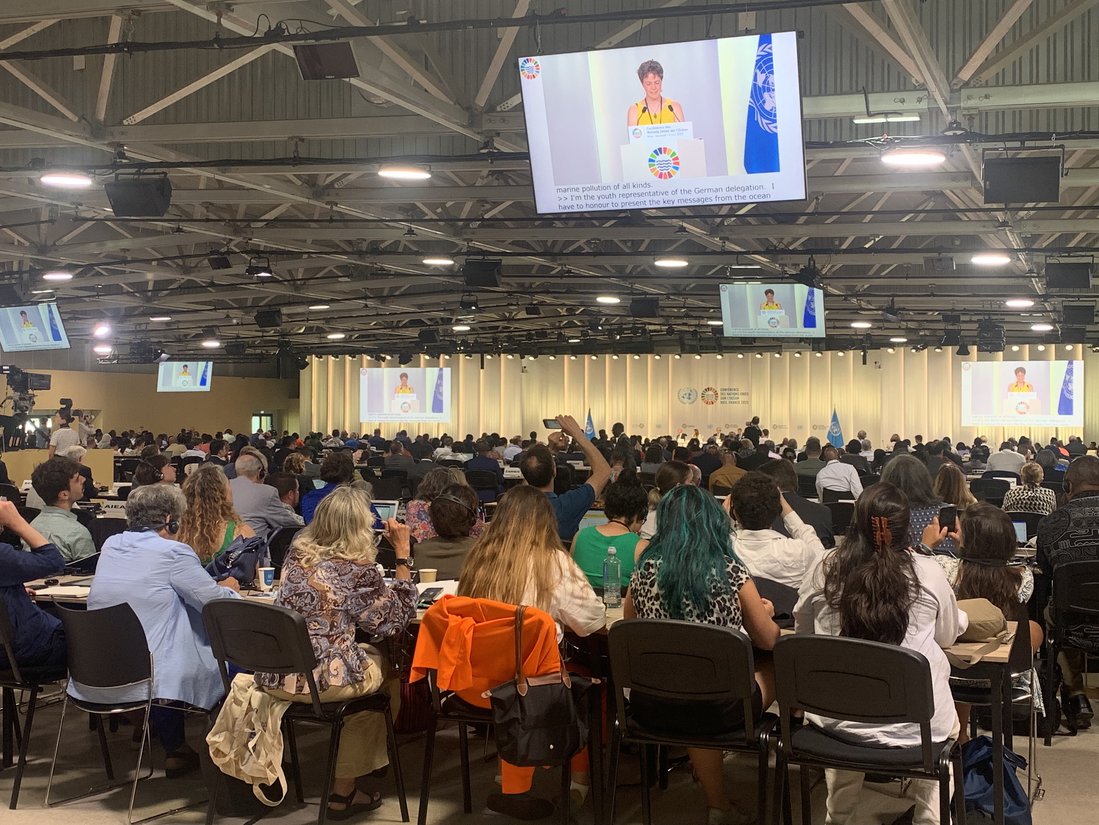
In June 2025, the third UN Ocean Conference (UNOC) took place in Nice. The aim of the international conference was to advance measures for the protection and sustainable use of the oceans and to implement the global Sustainable Development Goal for the oceans (SDG 14). This focus section provides information on the outcomes of the UN Ocean Conference.
What are the Planetary Boundaries?
To safeguard the stability of the Earth system and thus the foundations of human life, an international team of scientists has developed the concept of planetary boundaries. This concept is used to devise strategies for a more sustainable approach to climate and nature, and it also addresses ocean management, which focuses on the condition of the largest habitat on Earth.
The concept of planetary boundaries defines nine critical processes for which limits have been established. If these limits are exceeded, irreversible environmental changes may occur that could endanger the survival of humankind. An overview of the nine planetary boundaries:
- Climate change: Concentration of greenhouse gases in the atmosphere.
- Biosphere integrity: Preservation of biological diversity and ecological functions.
- Land-system change: Conversion of forests into agricultural land.
- Freshwater use: Withdrawal and alteration of global freshwater resources.
- Disruption of the Earth’s nitrogen and phosphorus cycles (e.g. through fertilisers).
- Ocean acidification: Absorption of carbon dioxide by the oceans, leading to a decrease in pH levels.
- Stratospheric ozone depletion: Protective layer against UV radiation.
- Atmospheric aerosol loading: Particle pollution that affects climate and human health.
- Introduction of novel entities: Pollution by chemicals, plastics (microplastics) and radioactive substances.
According to the concept, if society respects the planetary boundaries, large-scale environmental changes can be avoided. The Earth as our habitat would then remain broadly in a state similar to that known to humanity over the past 10,000 years—a state that enabled the development of modern civilisation. This refers to a planet characterised by a relatively stable, life-supporting climate and intact natural systems capable of providing sufficient clean water, breathable oxygen and food.
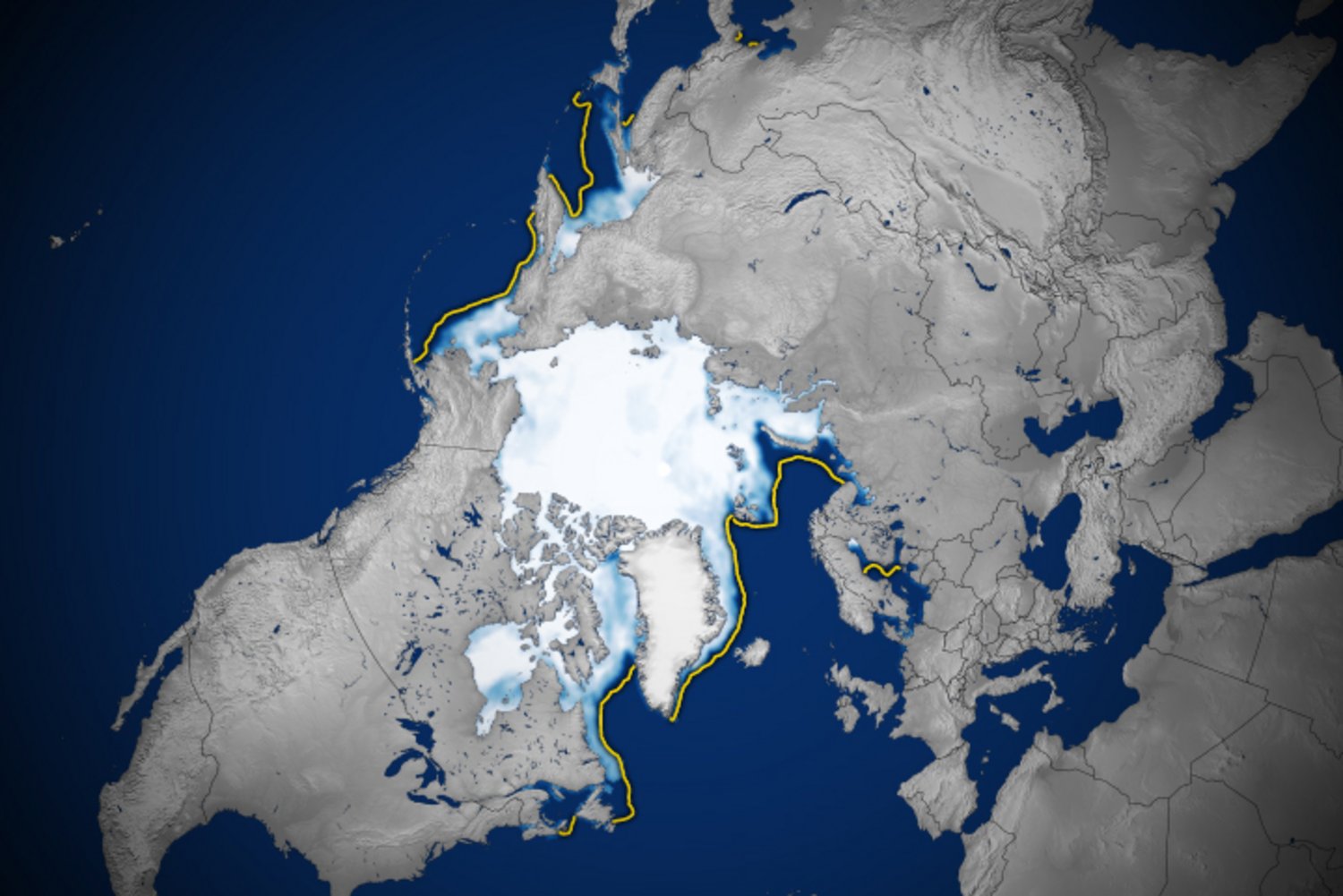
Focus topic: Planetary Boundaries
What lies behind the concept of planetary (carrying capacity) boundaries? This focus topic provides an overview.
Overview Publications on the State of the Oceans
How are the oceans doing? Scientifically sound yet accessible overview publications help to assess the current state of the oceans and to understand global interconnections. The following collection of links brings together freely available online publications that provide up-to-date research findings, status assessments and background information on climate change, ocean use and marine conservation. It is aimed at interested readers, educators, decision-makers and anyone seeking a reliable overview of the future of the oceans.
World Ocean Review (WOR)
The World Ocean Review is a regularly published, scientifically based series that examines the state of the oceans. Complex issues are presented independently, clearly and in a way that is accessible to a broad audience.
https://worldoceanreview.com/de/
World Ocean Assessment (WOA) – United Nations
The World Ocean Assessment is the United Nations’ integrated global assessment of the state of the oceans. It summarises scientific knowledge from natural, social and economic perspectives and provides a comprehensive overview of current ocean conditions.
Copernicus Ocean State Report
The Copernicus Ocean State Report presents scientific analyses of the condition of the oceans, including global indicators such as sea surface temperature, sea level, ocean chemistry and long-term trends.
https://marine.copernicus.eu/access-data/ocean-state-report
Ocean Atlas (Heinrich Böll Foundation)
The Ocean Atlas offers concise, visually rich information on the use, pressures and protection of the oceans. It is designed for a broad public and links scientific evidence with social and political perspectives.
https://www.boell.de/de/meeresatlas
German Advisory Council on Global Change (WBGU)
The German Advisory Council on Global Change (WBGU) is an independent scientific advisory body to the German Federal Government. Its reports and policy papers analyse global environmental change, including key issues related to water, oceans and sustainable development.
https://www.wbgu.de/de/
IPCC – Special Report on the Ocean and Cryosphere in a Changing Climate (SROCC)
This special report by the Intergovernmental Panel on Climate Change (IPCC) assesses scientific knowledge on the impacts of climate change on the oceans, sea ice and the cryosphere. It provides an important evidence base for policy and society.
https://www.ipcc.ch/srocc/