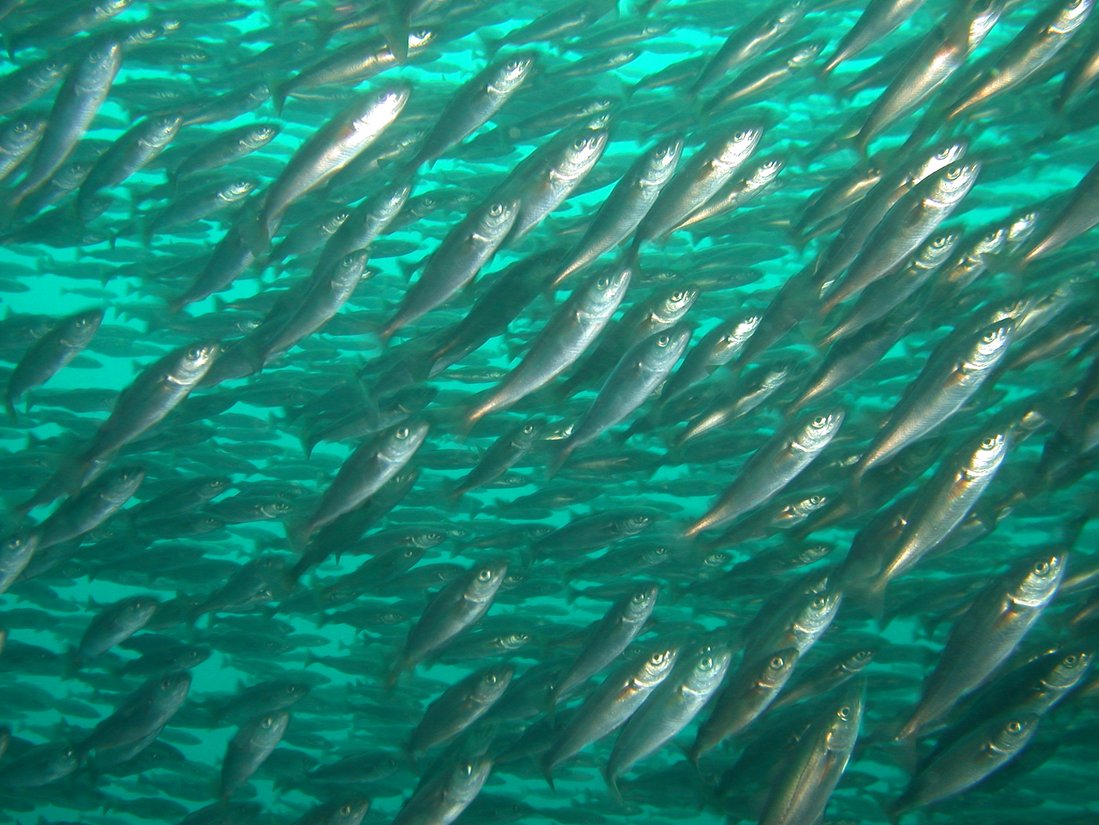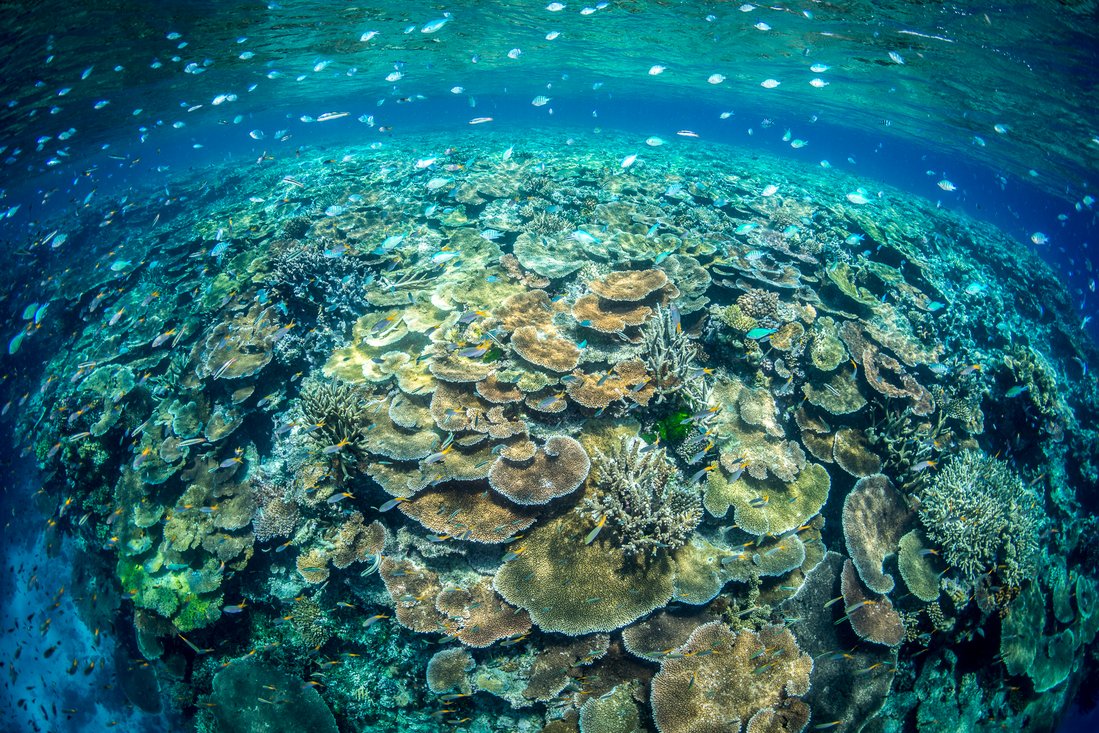

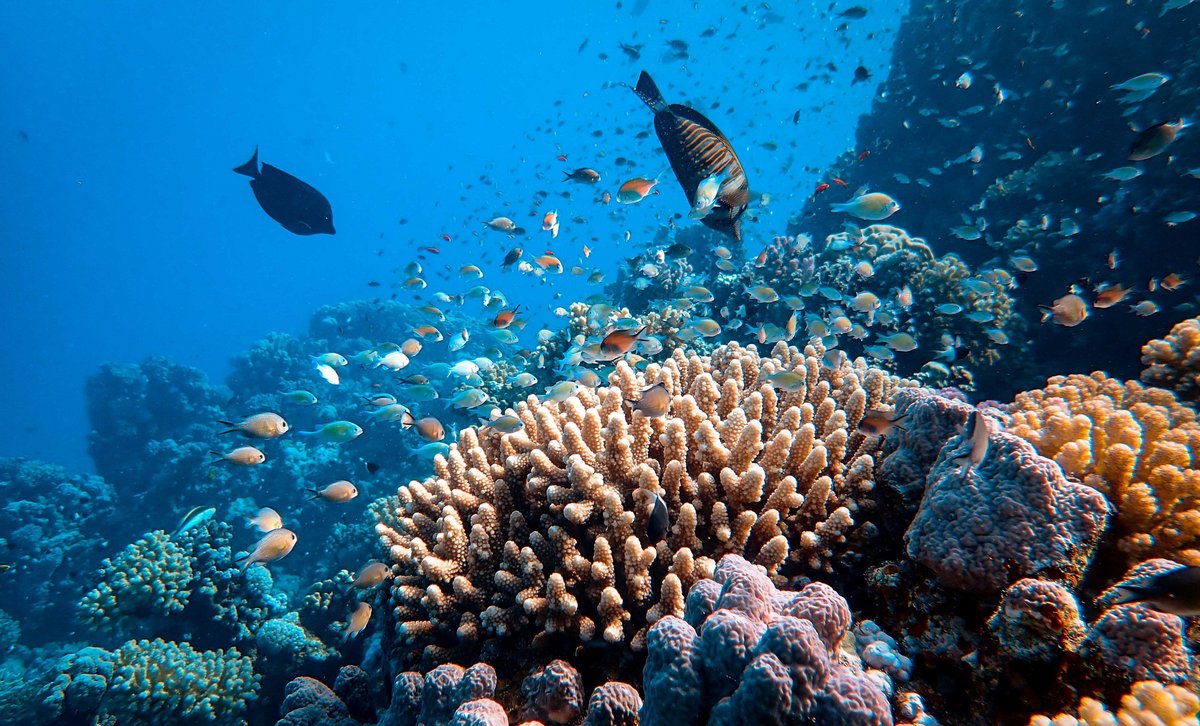
According to estimates, between one and two million different species live in the ocean today. Of these, around 248,900 species, or a maximum of a quarter, are currently known, i.e. scientifically described and listed in the World Register of Marine Species (WORMS). On average, around 2,330 new marine species are discovered each year, and there is no end in sight to this increase in species diversity because many marine regions, ecosystems and groups of organisms have hardly been researched in detail to date.
What do biodiversity and species richness mean?
The Ocean is considered healthy and resilient when its ecosystems are home to a wide variety of species that differ in their genetic makeup, appearance, characteristics and functions. Experts refer to this as high biodiversity. Over the past 30 years, this term has become one of the most important concepts in environmental protection and management and is now on everyone's lips in politics and society as well as in the media and science.
The Intergovernmental Science-Policy Platform on Biodiversity and Ecosystem Services (IPBES) defines biodiversity as the variety among living organisms of all origins, including terrestrial, marine and other aquatic ecosystems and the ecological complexes to which they belong. This diversity includes variations in genetic, morphological, phylogenetic and functional characteristics, as well as changes in frequency and distribution over time and space within and between species, communities and ecosystems.
In short, the term biodiversity refers to the diversity within species, between species, and between habitats and ecosystems. Terms such as species diversity, species richness and biological diversity are often used interchangeably with biodiversity. However, as the IPBES definition shows, the concept of biodiversity is more comprehensive. Species diversity and species richness are both merely measures of the number of species – within a specific ecosystem, a habitat or even a scientific sample. Strictly speaking, they therefore represent only one aspect of biodiversity.
Different marine habitats, different living conditions
Marine ecosystems are extremely diverse. Their inhabitants are equally varied. They are all important for biodiversity, as each offers very specific niches with unique living conditions to which the creatures living there have adapted. Here are a few examples of the diversity of ecosystems in the oceans.
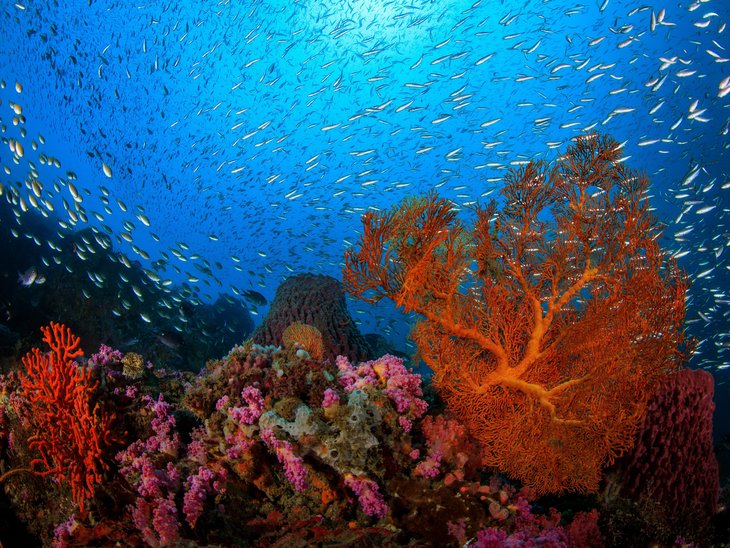
Tropical coral reef
Coral reefs are the hidden-object pictures of the sea: predators hunt for prey, fish and crustaceans thrive in the colourful shelters that protect them from predators, and marine mothers appreciate the diverse architecture as a nursery for their young. Coral reefs are bustling with life, making them invaluable habitats where marine ecosystems flourish.
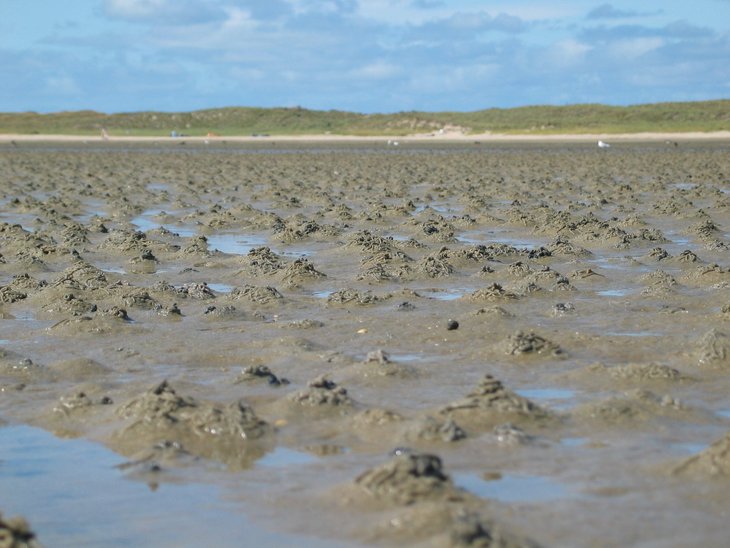
Wadden Sea
The changing tides determine life in the North Sea. The Wadden Sea falls dry twice a day - a very demanding habitat. As a World Heritage Site, it is specially protected and serves as a vital resting place for millions of migratory birds, for example. But life also flourishes in the sand.
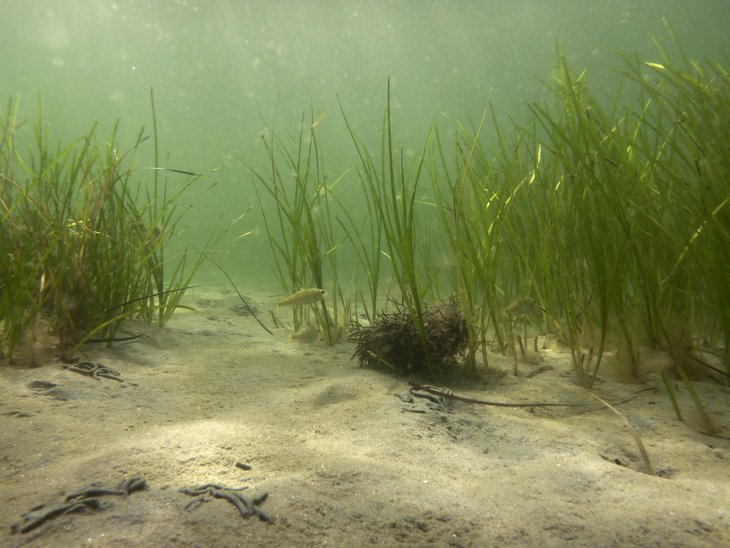
Seagrass meadow
Seagrass meadows thrive in the shallow waters off the coasts. They are favourite nurseries for numerous fish and shellfish and are therefore important for local fisheries. But that's not all. They also serve as pasture for marine animals such as turtles, protect coasts from erosion with their roots and store enormous amounts of carbon dioxide - even more than the rainforests.
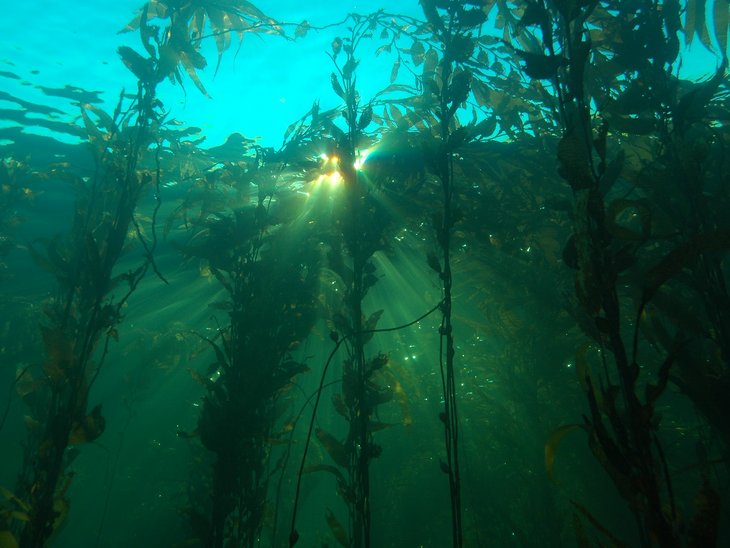
Kelp forest
Kelp is large seaweed that adheres to rocky substrates or the seabed and grows upwards towards the sunlight. They form huge underwater ecosystems that provide food and shelter for thousands of marine animals. Kelp forests are important for coastal protection as they mitigate currents. They can also store large amounts of carbon dioxide.
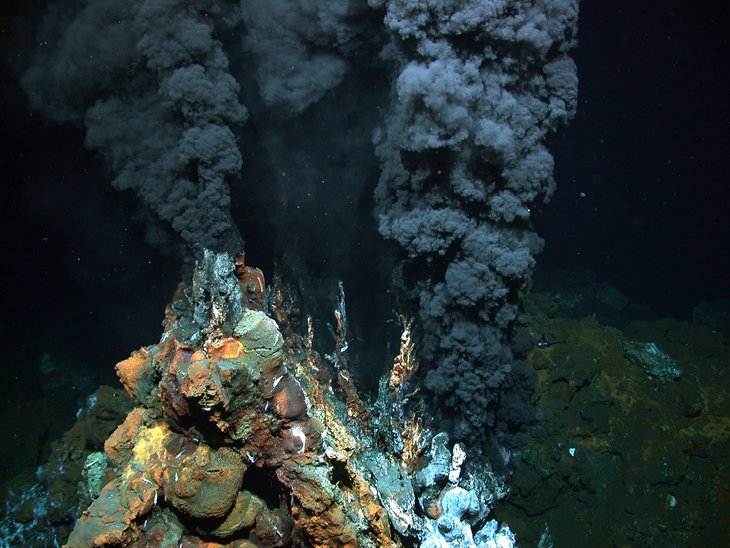
Black smoker
Hot springs can be found throughout the ocean wherever continental plates meet, where hot magma rises from the Earth's interior and heats the seawater. At these vents, microorganisms thrive by extracting chemical energy from the dissolved substances in the water - providing sustenance for a variety of mussels, crabs, and other marine creatures.
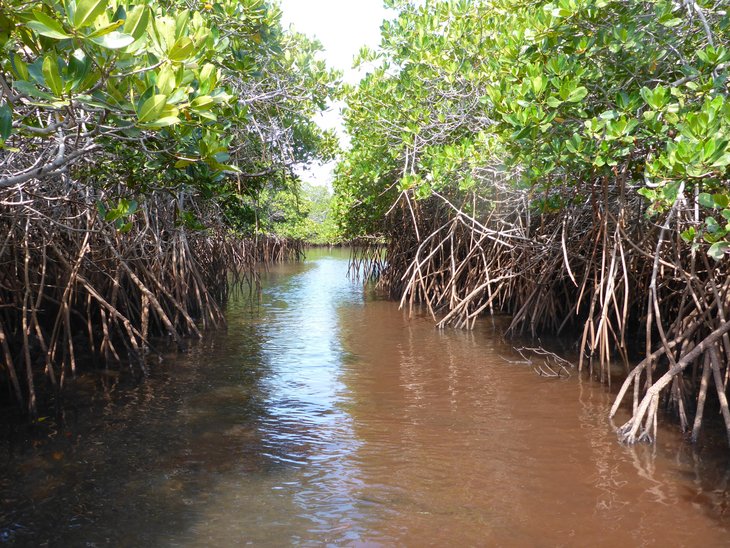
Mangroves
Mangroves are trees or shrubs that grow along tropical and subtropical coasts and river deltas. They tolerate saltwater and are known for their intricate root systems. Mangrove forests act as bridges between the sea and land, providing essential ecosystem services. For example, they offer numerous breeding grounds and hiding places for marine life.
Diversity at all levels
When experts talk about marine biodiversity, they mean the diversity of life in all components of marine ecosystems and at all levels of biological organisation – from genes and populations to individual species, species communities and ecosystems.
- Genetic diversity and individual differences within populations allow marine species to adapt their behaviour and life cycles to the specific environmental conditions of their local habitat.
- Differences between individual species are evident in the fact that organisms look different, have different evolutionary histories, inhabit different habitats and play different roles and functions within them.
- The diversity of communities and ecosystems, in turn, is based on the fact that species live together or side by side in different combinations and also influence or depend on each other in different ways.
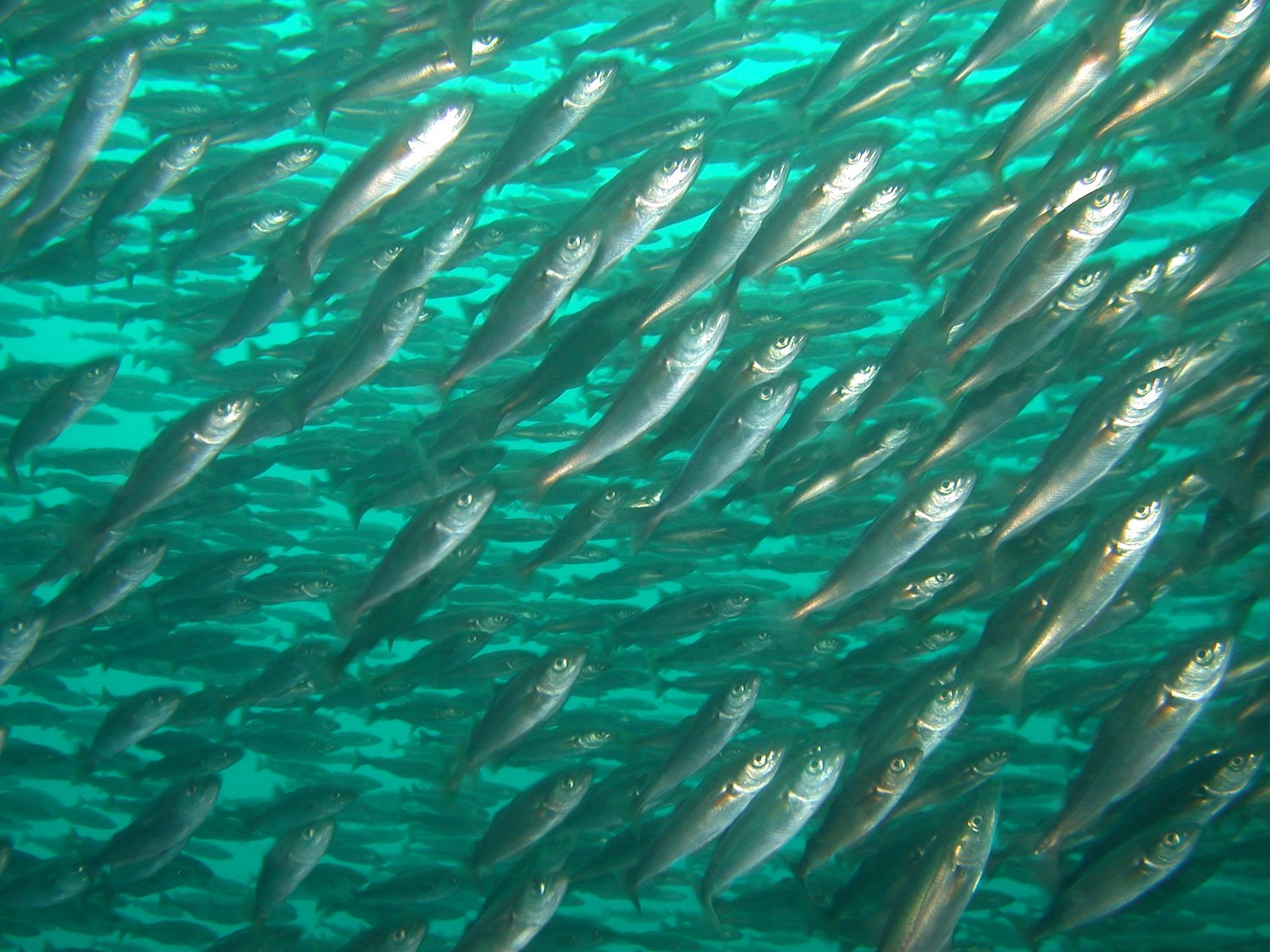
Focus topic: Genetic diversity
The genetic diversity of marine animals and plants is decreasing. This reduces the resilience and adaptability of the affected organisms. If they are properly planned and implemented, renaturation and other measures can help. This focus provides information on the significance of genetic diversity in the ocean.
The importance of marine biodiversity
Healthy and stable marine communities provide services that are essential for human survival. They supply oxygen for us to breathe, food for us to eat and protection against flooding. High biodiversity is essential for an ecosystem to function properly. It makes habitats more productive and resilient to external threats such as changes in the environment.
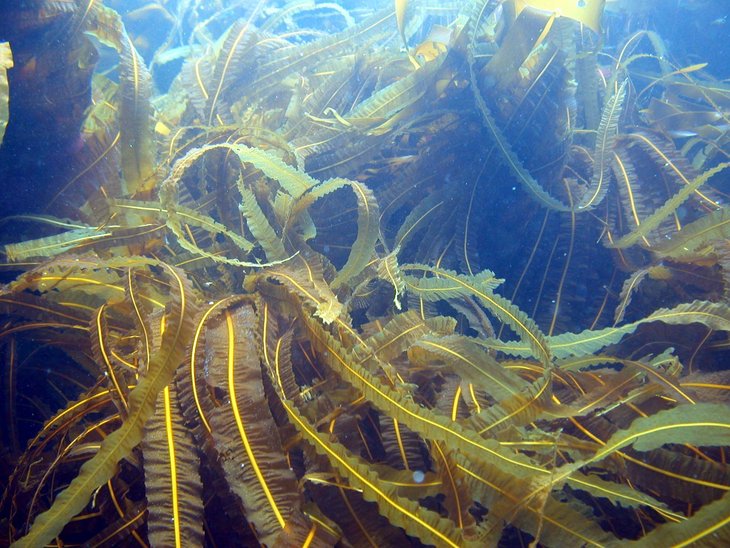
High biodiversity ensures that a habitat can be used optimally. This is because different species have different requirements, for example in terms of light or temperature. For example, there are large algae that like a lot of light and grow best in high sunlight. Other large algae, on the other hand, prefer regions of a habitat with less light. They thrive best in the shade of light-loving species. Together, they form a dense algae forest that provides much more food and hiding places for marine animals than a single species of large algae alone.
The species in a biotic community do not all occur with equal frequency. Often, a few species dominate, while there are many rarer species that were unable to prevail in the selection process but have not disappeared either. They can play an important role in disturbances: if environmental conditions change, they suddenly have an advantage and can take over the role of the dominant species.
However, there are also some habitats in the sea that have extreme environmental conditions. For example, hot springs in the deep sea. The communities in such dark, hot places consist of comparatively few species, but these are perfectly adapted to the extreme conditions.
The communities of marine ecosystems are constantly changing. These processes of change are normal and ensure the resilience of the ecosystem. It is therefore entirely natural for species to migrate in and out or, in some cases, even become extinct.
What happens when new species migrate?
The migration of foreign species can have a significant impact on established communities and even upset their balance. But not every newcomer is harmful: Japanese wireweed (Sargassum muticum), for example, which was introduced into the North Sea, has integrated itself into the Wadden Sea ecosystem without causing any damage. The bristle worm Polydora websteri, on the other hand, which originates from Asia, bores into the shells of oysters and is therefore considered a shellfish pest.
Particularly dangerous are so-called invasive species. These are new species in a habitat that find no natural predators and can reproduce uncontrollably. In some cases, they reproduce so extensively that they claim all resources for themselves and displace native species. An example of this is the Pacific oyster (Crassostrea gigas) in the North Sea.

Research findings from the North Sea and Baltic Sea demonstrate how dynamically marine communities can react to newcomers, often becoming enriched as a result. However, there are also clear losers in species displacement. On the one hand, there are those species that cannot withstand competition from newcomers and are displaced. On the other hand, the new species can also introduce unknown diseases into the habitat and transmit them to the long-established individuals. If the latter do not have or cannot develop their own defence mechanisms, they die en masse and disappear from the habitat.
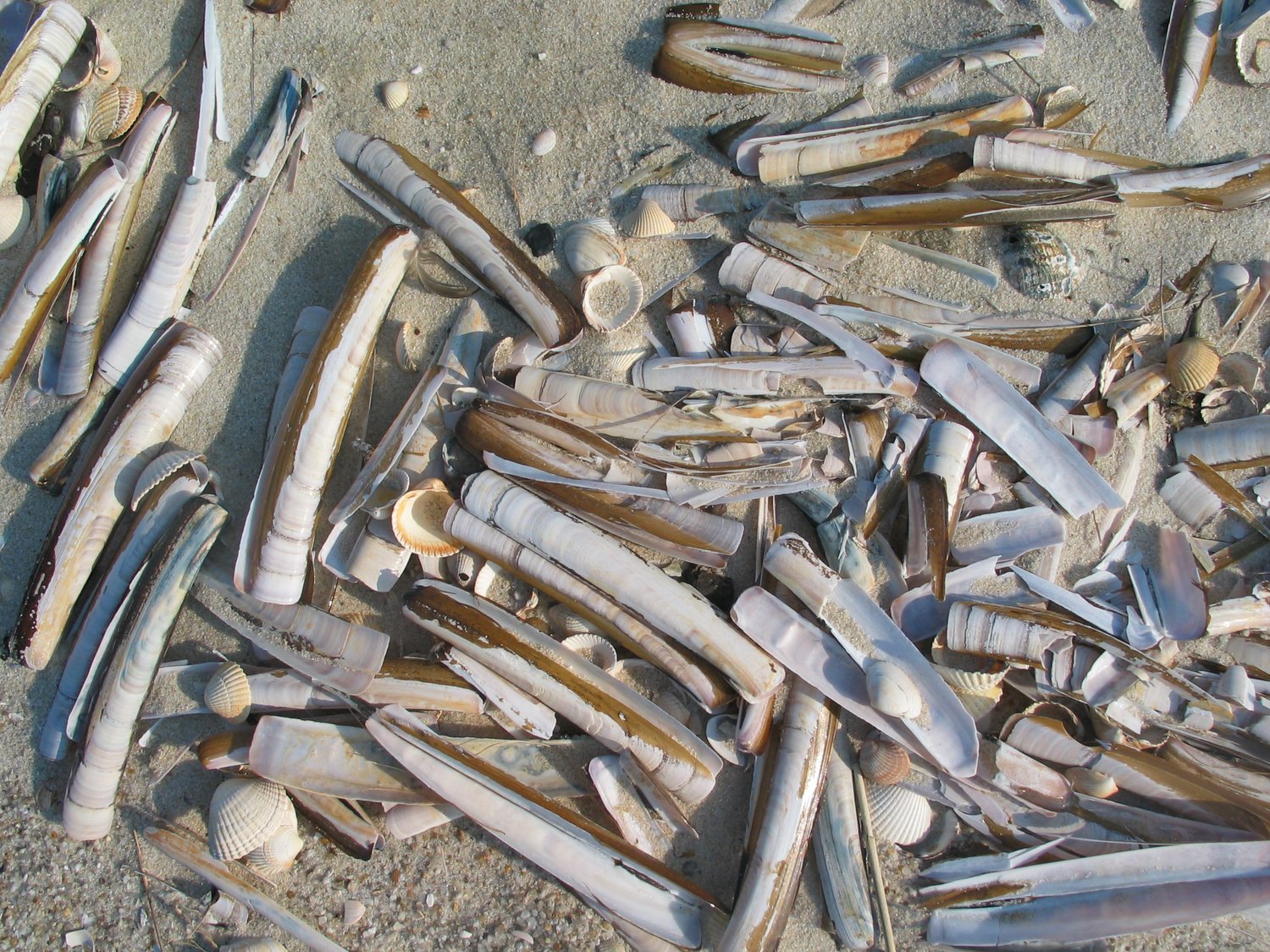
Focus topic: Non-native species
Introduced and immigrant animals, plants and microorganisms have been changing life in the oceans for centuries. What impact do such new settlements have on biodiversity? This focus provides information on the origin and significance of alien species in the sea.
Species extinction - quite natural in small numbers
The changing processes of ecosystems also include the extinction of animal and plant species. It is a natural part of the evolution of life on Earth. When a species disappears, new or other species usually take over its roles and functions. However, this adaptation takes time. The mechanism works well as long as the extinction rate remains within a normal range—meaning that no more than one in 10,000 species goes extinct within 100 years.
If the number of disappearing species rises far beyond this threshold, the world heads toward a mass extinction. This term refers to periods in which around 75% of all living species vanish within a short geological timeframe (usually less than two million years) without other species filling the functional gaps they leave behind. The last mass extinction occurred 66 million years ago at the end of the Cretaceous period when the dinosaurs disappeared.
The sixth mass extinction
The sixth mass extinction in Earth's recent history is currently looming. Due to human interventions in nature and the Earth's climate, the extinction rate has increased 100 to 1,000 times compared to pre-human times. Around one million species are currently at risk of extinction, and many species can no longer be found in parts of their original habitats.
The ocean is also on red alert. New research confirms that if temperatures in the atmosphere and the ocean continue to rise, species losses due to heat stress and oxygen depletion in the ocean over the next 75 years will be as severe as those caused by overfishing, pollution, and habitat destruction. In total, if global temperatures rise by up to 4.9 degrees Celsius by the end of this century, so many marine species would disappear that the conditions for a mass extinction would be met.
To preserve marine and ocean ecosystems and maintain biodiversity, effective ocean management is essential. Marine protected areas must not exist only on paper—the enforcement of regulations must be monitored, and violations must be sanctioned. Only then do we have a chance to prevent a mass extinction.
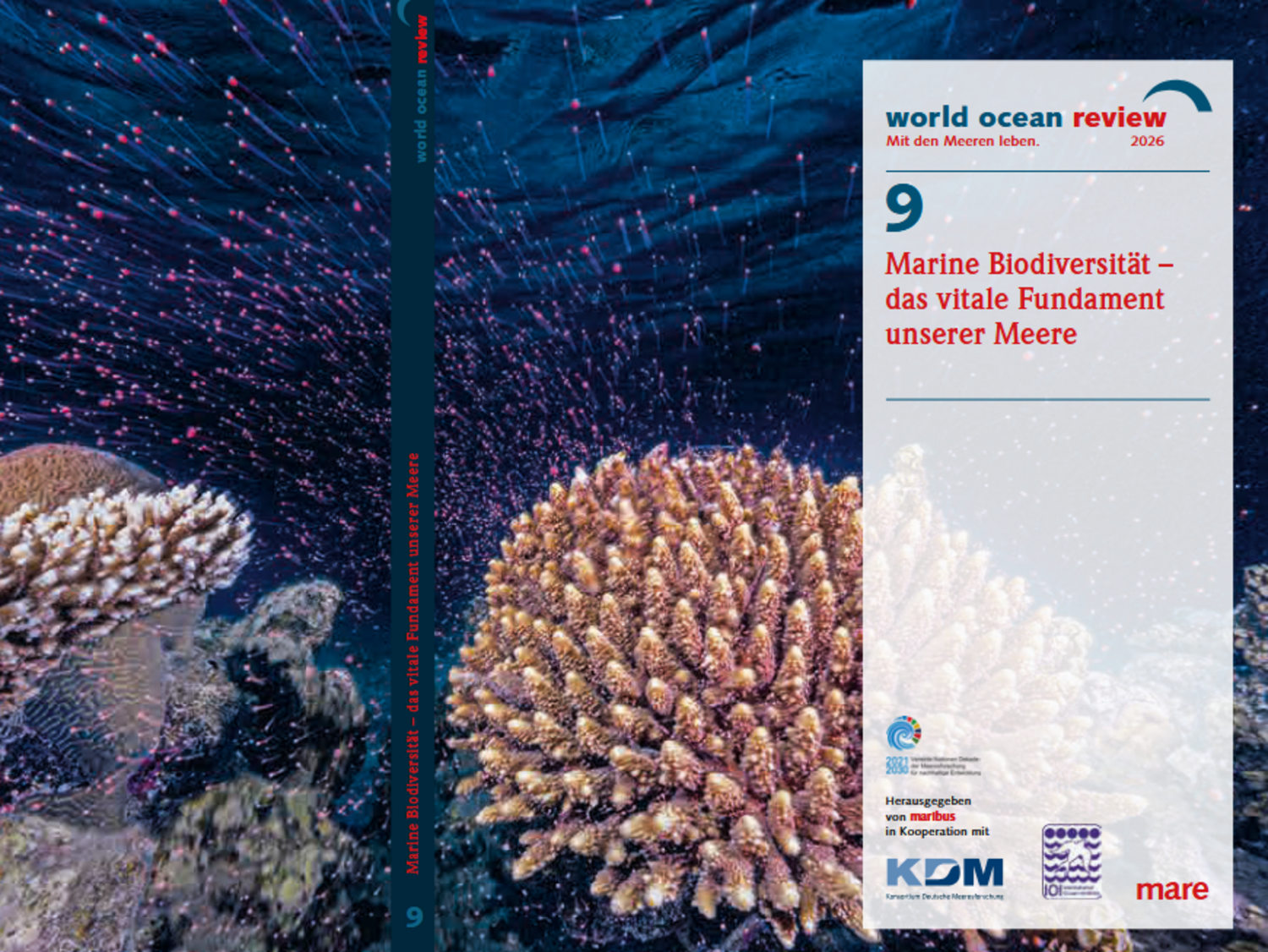
Marine Biodiversity
The World Ocean Review ‘Marine Biodiversity – the vital foundation of our oceans’ (WOR 9) describes the immense diversity of species in the oceans and their benefits for humans. It also highlights the decline in species richness and ways to successfully protect it.
Databases on marine biodiversity
In times of global change, comprehensive knowledge of marine biodiversity is more important than ever. Detailed insights into which species live where and how form the foundation for effective nature conservation, sustainable fisheries, and marine management that combines protection with responsible use. The following marine biodiversity databases bring together the results of numerous expeditions, taxonomic expertise and ecological observations in freely accessible online portals.
WoRMS – World Register of Marine Species
WoRMS is a global register of marine life. This comprehensive database provides a list of all scientific names of marine organisms, including their synonyms. Experts for the various organism groups continuously update the data holdings.
OBIS – Ocean Biodiversity Information System
OBIS is a global platform that collects data on marine organisms and makes them freely available online. The database was developed as part of the large-scale Census of Marine Life.
SeaLifeBase and FishBase
SeaLifeBase is a global online database that compiles biological and ecological information on marine organisms. It is complemented by FishBase, which provides corresponding data on fish species.
https://www.sealifebase.ca/search.php
https://fishbase.org/search.php
EMODnet Biology
The European Marine Observation and Data Network (EMODnet) is a long-term marine data initiative of the European Commission. EMODnet Biology focuses on biological datasets from European marine regions.
- HIFMB Fact Sheet: Biodiversity trends, their interpretation and implications
- Bouchet, P., et al., 2023. Marine biodiversity discovery: the metrics of new species descriptions. Frontiers of Marine Science, doi:10.3389/fmars.2023.929989
- Cochrane, S. K. J., et al., 2016. What Is Marine Biodiversity? Towards Common Concepts and Their Implications for Assessing Biodiversity Status. Frontiers in Marine Science, doi:10.3389/fmars.2016.00248
- Díaz, S., & Y. Malhi, 2022. Biodiversity: Concepts, Patterns, Trends, and Perspectives. Annual Review of Environment and Resources, doi:10.1146/annurevenviron120120054300
- Rogers, A., et al., 2022. Discovering marine biodiversity in the 21st Century. Advances in Marine Biology, doi:10.1016/bs. amb.2022.09.002