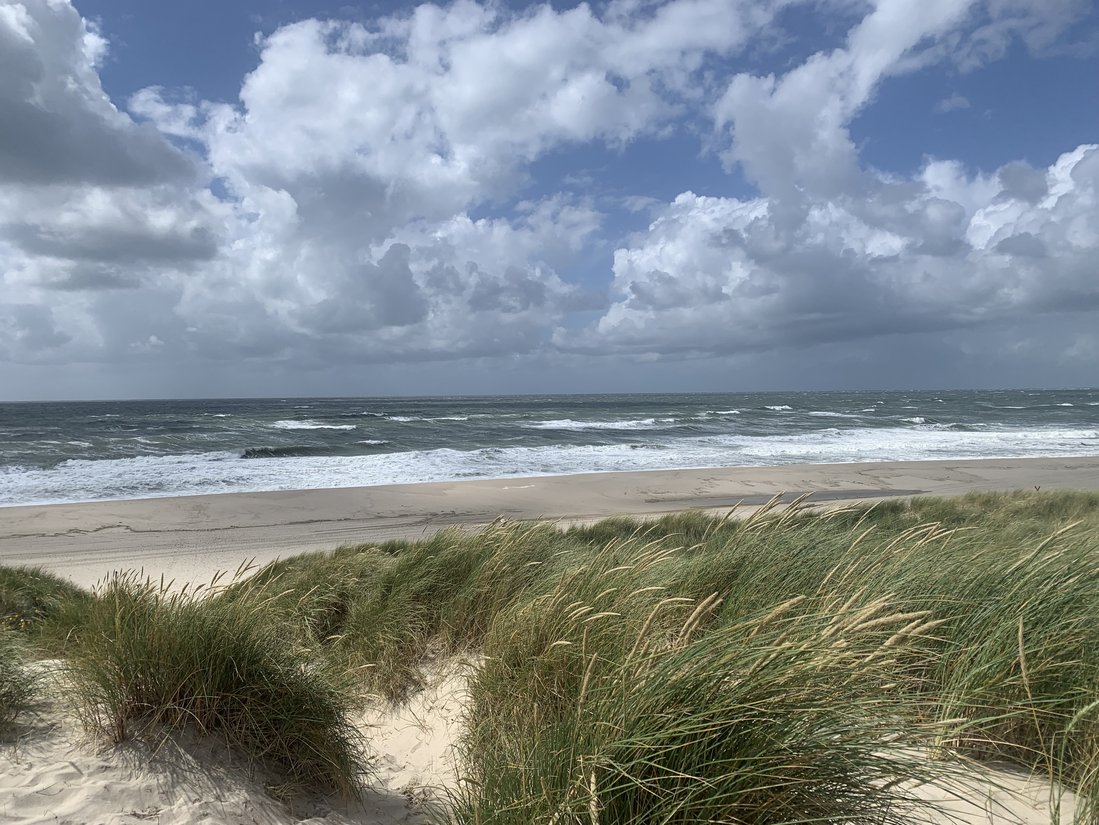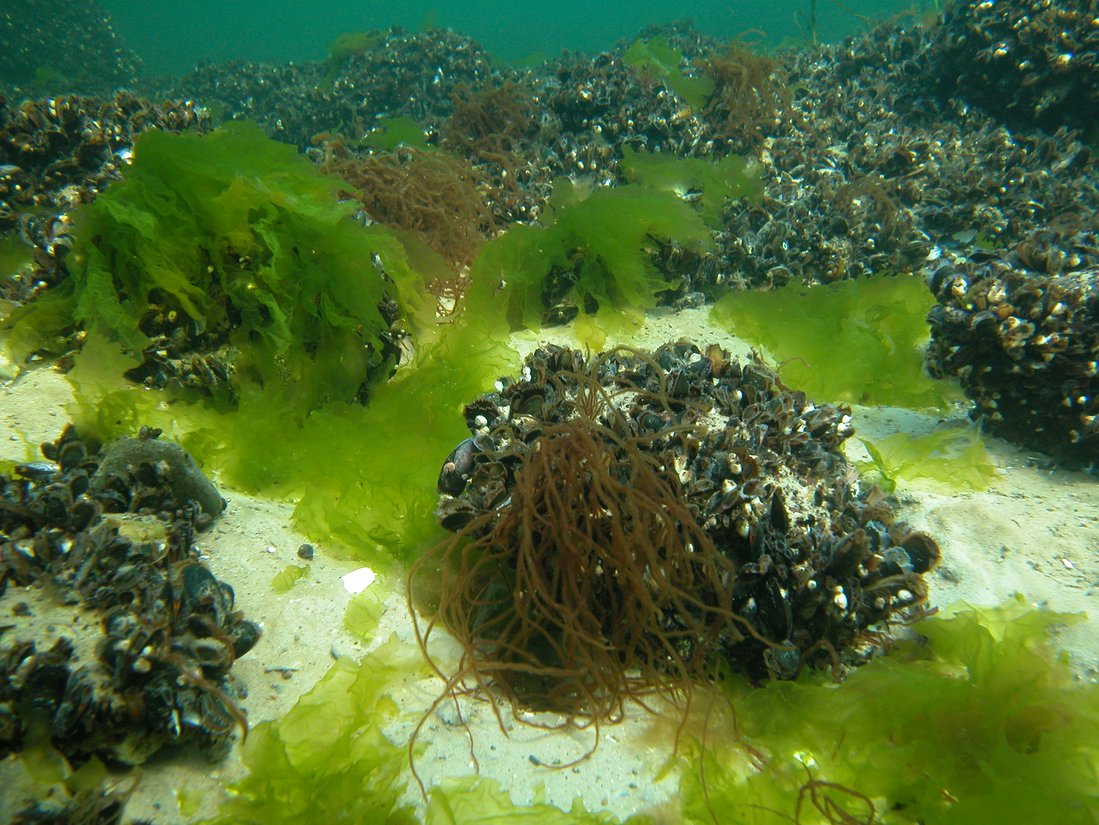
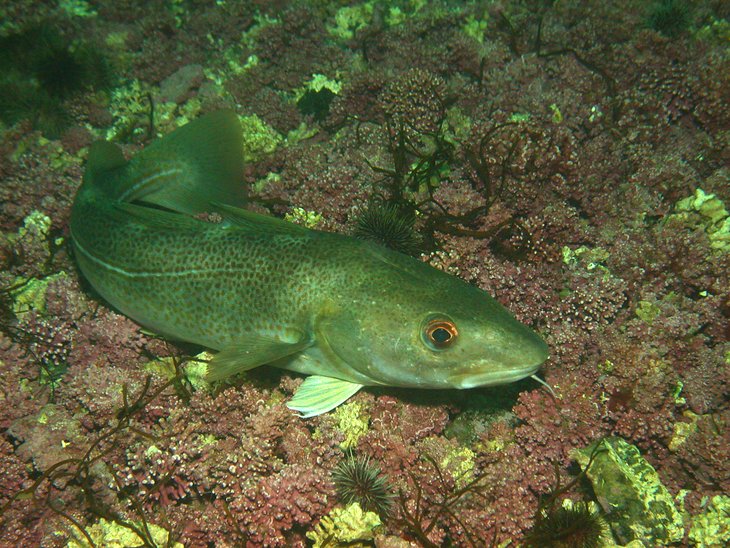
The Baltic Sea is polluted, and the effects of this pollution are often only apparent in autumn. In September and October, particularly strong offshore winds sweep across the Baltic Sea, pushing the surface water away from the German coast and out into the open Baltic Sea. This causes oxygen-depleted deep water to rise near the coast, sometimes so quickly that fish living in these areas are unable to escape. They suffocate, and their lifeless bodies wash up on beaches by the thousands shortly afterwards. This is what happened in the second half of September 2025, for example.
Winds and buoyancy in deep water are natural processes that cannot be prevented. The situation is different when it comes to oxygen depletion in the Baltic Sea. This is caused by human nutrient inputs from land and represents one of the biggest ecological problems for the marine environment of the German Baltic Sea waters, according to the latest Baltic Sea Status Report.
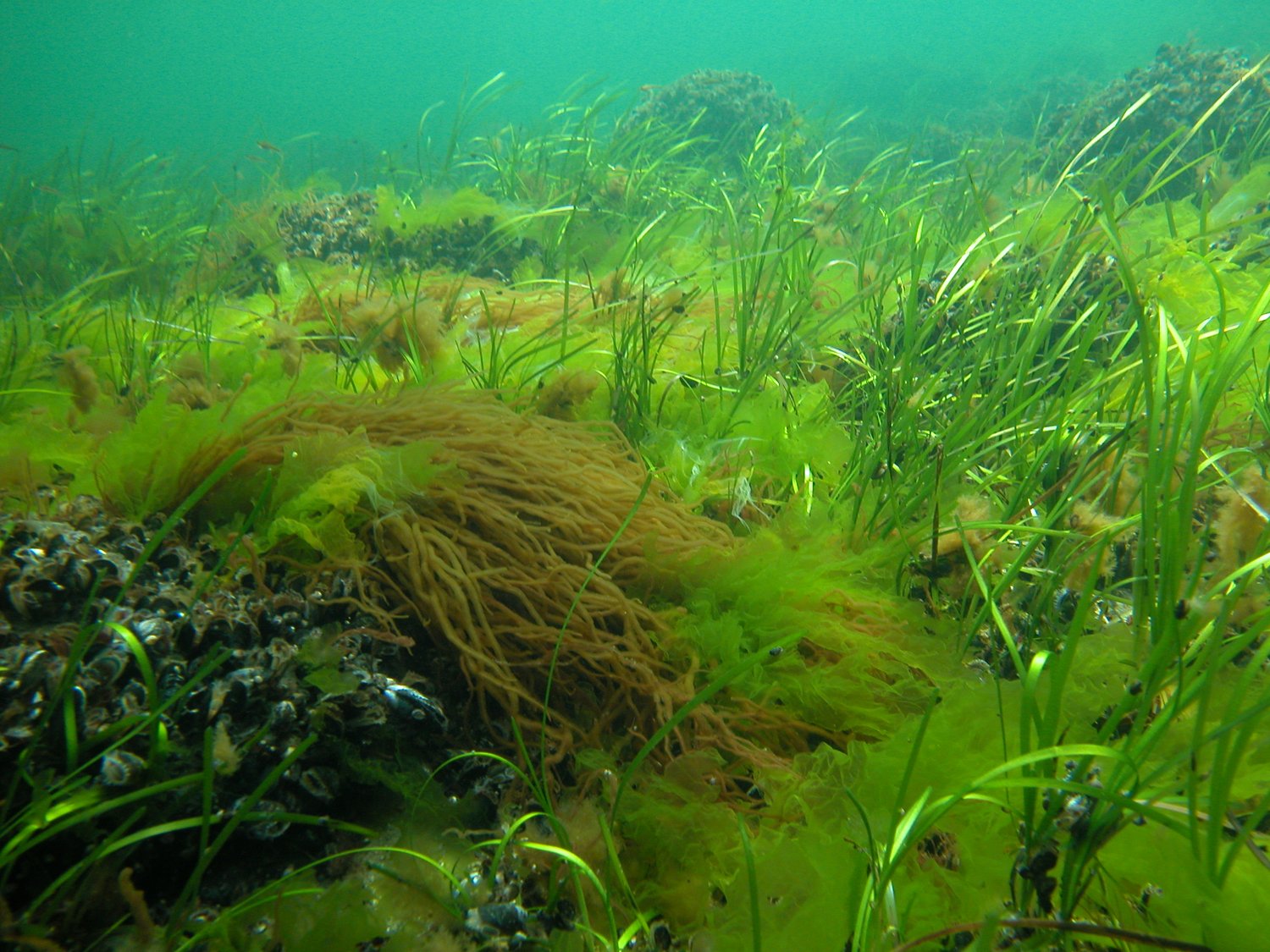
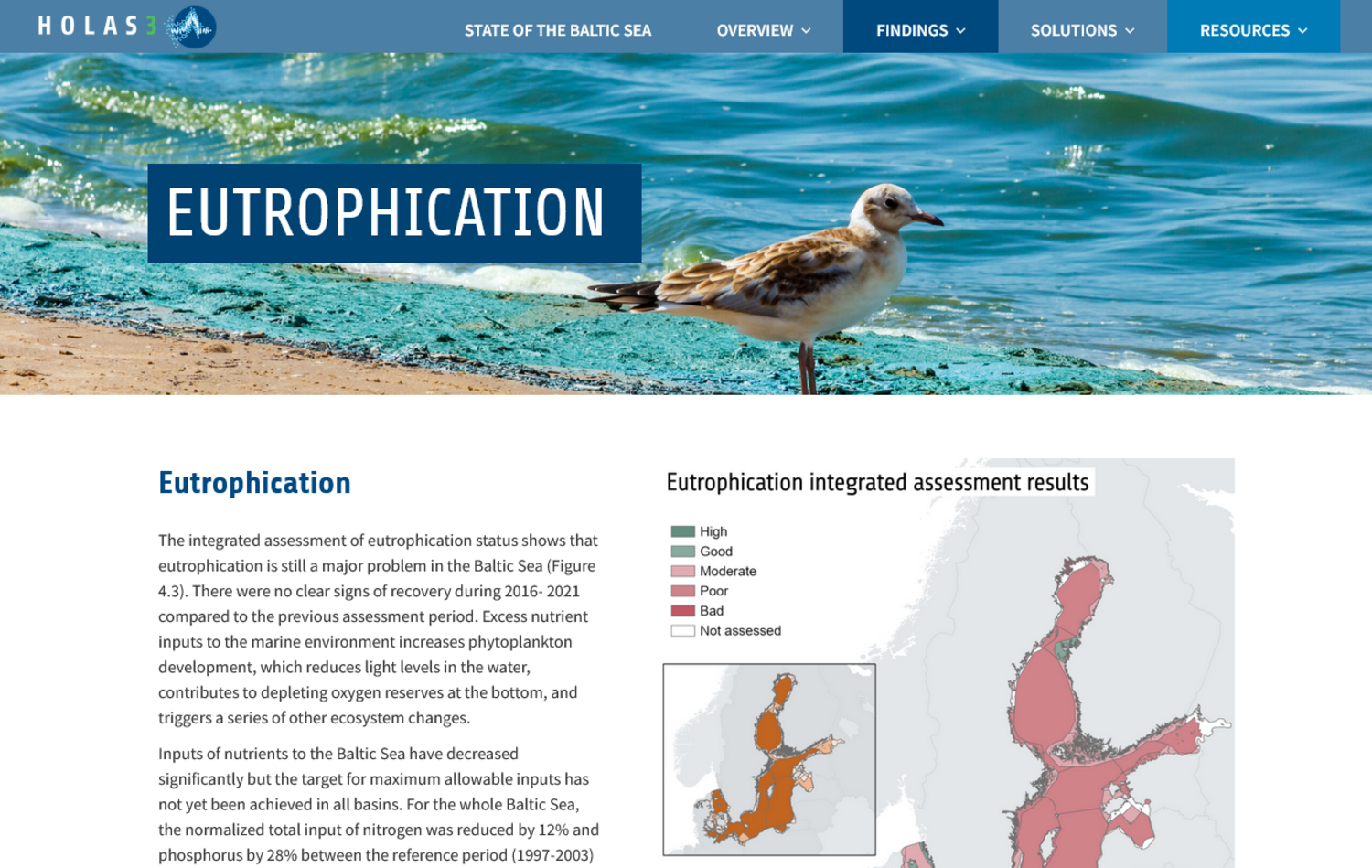
Oxygen depletion in the deep waters of the Baltic Sea is primarily caused by the overfertilisation of the water, a process known as eutrophication. This occurs when large quantities of plant nutrients (nitrogen and phosphorus) are released into the sea. Microalgae absorb these nutrients and form large blooms. When the algae subsequently die, their remains sink to the bottom. There, microorganisms decompose the biomass, completely consuming the oxygen contained in the deep water.
As a result, marine organisms living at depth die. If further bacterial processes produce hydrogen sulphide, then only specialised microorganisms can survive in these deep-water layers. These zones are therefore also known as 'dead zones'.
Oxygen-depleted water at the seafloor causes phosphate to dissolve and be released into the sediment and water column. This initiates a vicious cycle that promotes nitrogen-fixing cyanobacteria and exacerbates eutrophication further.
2. Low supply of oxygen-rich water
The consequences of oxygen depletion would be less severe if the deep waters of the Baltic Sea were regularly exchanged by ocean currents. However, this exchange fails due to two natural features of the Baltic Sea.
Firstly, the Baltic Sea is highly stratified due to its numerous freshwater inflows. According to experts, the seawater is oxygen-saturated and brackish down to depths of about 60–80 metres in the central Baltic Sea and 10–15 metres in the western Baltic Sea. This means that the salinity of the surface water is low and it is comparatively light. The water masses below have a much higher salinity at greater depths and are therefore heavier. These differences in salinity create a boundary between the two bodies of water.
This barrier causes particles to accumulate and limits the exchange of substances. The 'stagnant' body of water below this barrier contains no oxygen and is rich in nutrients. In shallow coastal areas, however, wind and waves usually break up this stratification, mixing the two bodies of water.
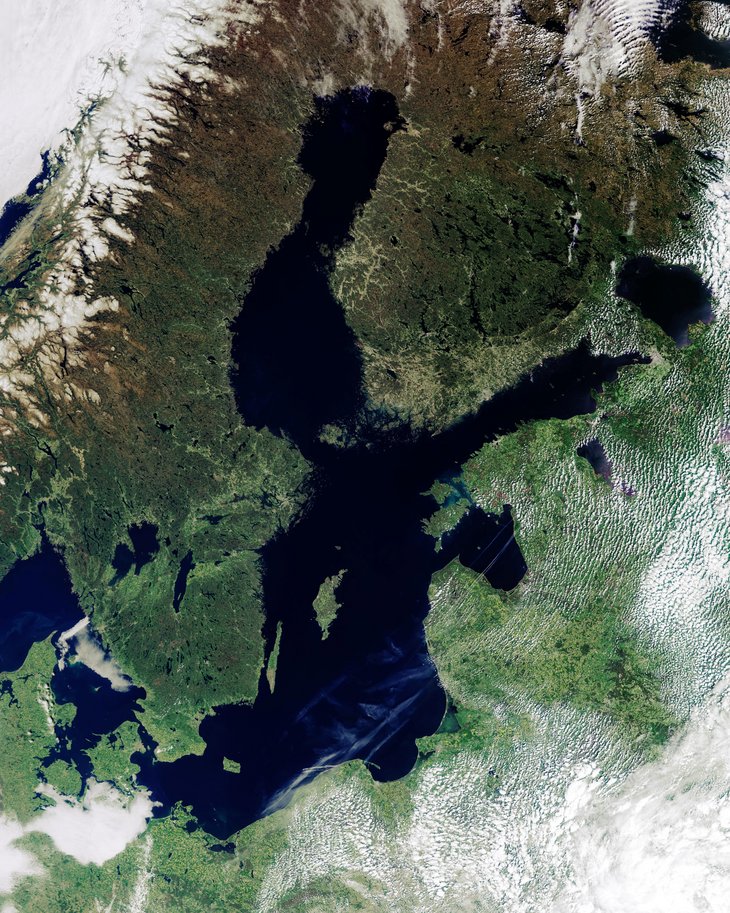
A second obstacle is posed by physical barriers: the Baltic Sea is almost completely surrounded by land masses and is only connected to the Kattegat, the North Sea and the open ocean beyond via the narrow straits of the Belt Sea (the Great Belt and the Little Belt). Furthermore, several undersea thresholds divide the Baltic Sea into different basins, which impedes water exchange even more.
The narrow waterways between Germany, Denmark and Sweden allow low-salinity, light surface water to reliably flow from the Baltic Sea into the North Sea. However, only under very specific conditions does the high-salinity, heavy North Sea water manage to pass through the straits and over the various sills into the central Baltic Sea, where it settles on the seabed.
Whether this inflowing water is enriched with sufficient oxygen depends on the season. Ideally, a large 'saltwater intrusion' would replace the entire deep water of the western Baltic Sea with oxygen-rich saltwater of Atlantic origin. In the process, the oxygen-free water is displaced to the east.
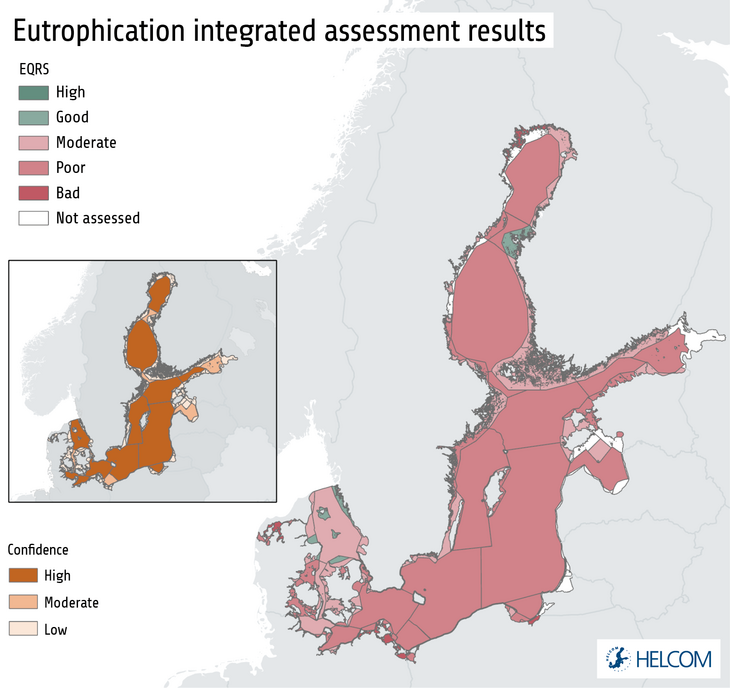
To reduce oxygen consumption in deep water, nutrient inputs must be reduced further. According to HELCOM, around 94 per cent of Baltic Sea waters were overfertilised to such an extent between 2016 and 2021 that their nutrient levels exceeded the limit for good environmental status. This applied to all areas of the open sea and around 83 per cent of coastal waters.
The largest amounts of nutrients enter the Baltic Sea via rivers. Nutrient inputs from the air account for around ten per cent of the total. These mainly originate from shipping and road traffic, where fuels are burned and nitrogen particles are released. In turn, the rivers carry nutrients into the sea that have either been used as fertilisers in agriculture and washed out of the soil by rain, or originate from industrial and sewage treatment plants where the wastewater has not been adequately treated. However, such point sources have now been almost completely eliminated in the Baltic Sea region.
4. Experts regularly assess nutrient pollution
Countries bordering the Baltic Sea have been measuring nutrient pollution in their coastal waters for over 120 years. Since 1998, the open sea has also been monitored. Since 1998, HELCOM experts have been collecting this and other data and assessing the extent and consequences of eutrophication at regular intervals. As a result, we know that nutrient pollution in the Baltic Sea increased sharply until the 1980s. Since the 1990s, however, nutrient inputs have been slowly declining.
In their latest special report on the state of eutrophication in the Baltic Sea from 2016 to 2021, HELCOM experts reported a further decline in nutrient inputs. According to the report, nitrogen inputs into the Baltic Sea amounted to around 859,000 tonnes in 2020. This was 12 per cent less than in the 1997–2003 comparative period. Phosphorus inputs fell to 26,389 tonnes in 2020, a 28 per cent decline. Nevertheless, further quantities of nutrients continue to enter the already heavily overfertilised Baltic Sea each year.
5. Climate change exacerbates the oxygen problem
Therefore, the environmental condition of the Baltic Sea has not improved. In fact, the opposite is true. According to HELCOM experts, key environmental indicators deteriorated in most areas of the Baltic Sea between 2016 and 2021. These include water turbidity, cyanobacterial pollution, and oxygen depletion at greater depths.
The experts conclude that the consequences of climate change are exacerbating the effects of ongoing nutrient inputs. Rising water temperatures are causing different water masses to stratify more strongly. For the Baltic Sea, this means its surface and deep waters are mixing less frequently, and less oxygen-rich water is reaching the depths.
The warmer the Baltic Sea becomes, the less oxygen can dissolve in its water. This makes it all the more important to make real progress in reducing nutrient inputs from land.
You can find more information on oxygen depletion in the seas and oceans here on MeereOnline.
6. The long-term protection goal
The countries bordering the Baltic Sea have developed a plan to this end: In the long term, their goal is to reduce nutrient input to such an extent that no further environmental changes are triggered. This goal will be achieved when
- nutrient concentrations in the Baltic Sea fall to natural levels;
- the water is clear again;
- algal blooms only occur at natural levels;
- the oxygen content of Baltic Sea water has returned to its natural level and
- animals and plants displaced by nutrient pollution will have returned to their original habitats.
Sources in German:
- World Ocean Review 07: Lebensgarant Ozean – Kapitel 2: Der Ozean im Klimawandel, Link: https://worldoceanreview.com/de/wor-7/der-ozean-im-klimawandel/
- Warnsignal Klima - Auswirkungen von Sauerstoffmangel auf die Artenzusammensetzung in den Meeren (2016), Link: https://www.klima-warnsignale.uni-hamburg.de/wp-content/uploads/pdf/de/biodiversitaet/warnsignal_klima-die_biodiversitaet-kapitel-2_5.pdf
- Leibniz-Institut für Ostseeforschung Warnemünde (IOW): Faktenblatt zur Sauerstoffsituation am Boden der Ostsee, https://www.io-warnemuende.de/sauerstoff.html
- Leibniz-Institut für Ostseeforschung Warnemünde (IOW): Faktenblatt / Erklärung zum „Fischsterben“
vor Warnemünde, Nienhagen und Markgrafenheide im September 2025, https://www.iow.de/fischsterben-bei-rostock-im-september-2025.html
Further source in English:
- HELCOM Thematic assessment of Eutrophication 2016-2021. Baltic Sea Environment Proceedings No.192, https://helcom.fi/wp-content/uploads/2023/06/HELCOM-Thematic-assessment-of-eutrophication-2016-2021.pdf